
Seedance 2.0 vs Kling 3.0 | The Ultimate AI Realism Test
Written by Mable Huang and Edited by Tyler Smith
In this article, we are going to compare Seedance 2.0 and Kling 3.0 to see which AI Video model handles eating scenes more realistically.
If you've been around AI long enough, you've probably seen the infamous Will Smith eating spaghetti video.
The clip went viral back in 2023 because it perfectly showcased just how bad AI video was at handling everyday human behavior.
The spaghetti warped, the fork melted, the mouth movements made no sense, and the entire sequence felt like something from a nightmare.
Fast forward a few years, and AI video has improved dramatically.
We ran 5 eating tests once per model using the same starting image and took the first generation from each.
Here are the different eating tests we ran:
Burger Test
Ramen Test
Watermelon Test
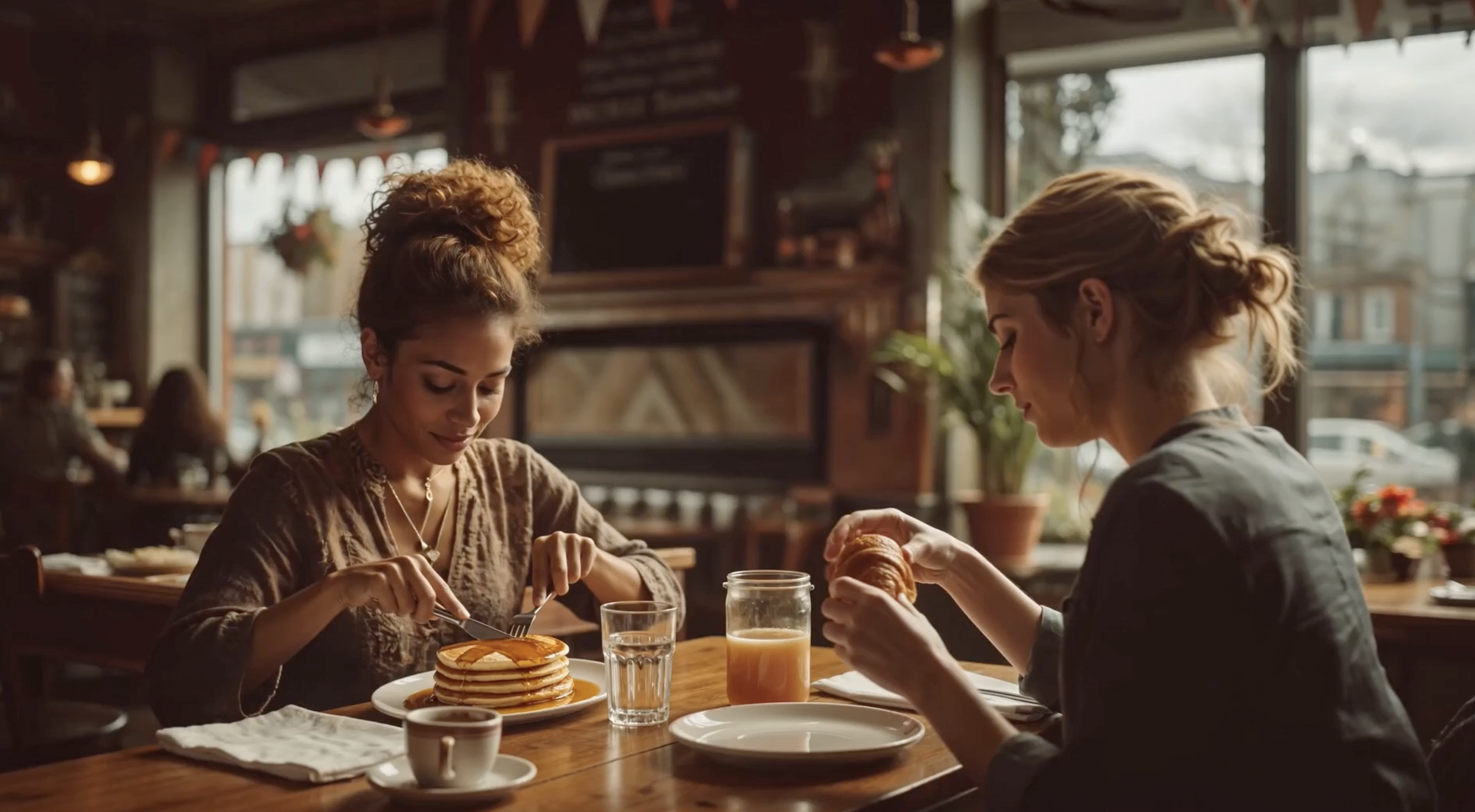
Brunch - two-character test
Chicken wing - multicharacter test
TLDR: Seedance 2.0, takes the lead in almost all of the instances here.
Kling 3.0 vs Seedance 2.0 | AI Eating Realism Tests
Below are the 5 eating tests we ran using Seedance 2.0 and Kling 3.0 to see which model could generate the most realistic eating behaviors.
AI Eating Realism Test #1: Burger
First, we wanted to see how each model handled a simple burger-eating scene.
Here’s the prompt below…
Subtle handheld close-up with slight forward drift as he takes a large bite of the cheeseburger, chewing naturally as a small bit of ketchup smears near the corner of his mouth. While still chewing, he says: “Oh, okay… that’s actually really good,” as he grabs a napkin and wipes his mouth. He then reaches for a few fries with the same hand, dips them into ketchup, and puts them into his mouth. He takes a sip from his soda, leans back in the booth with a satisfied “Mmm,” then immediately goes in for another bite of the burger.
Seedance 2.0
Kling 3.0
This one was a pretty easy verdict.
Seedance 2.0 delivered a much more realistic sequence of actions, successfully showing the subject taking a bite of the burger, dipping fries into ketchup, and taking a sip from a glass of Coke.
Kling 3.0 struggled with several parts of the interaction.
The subject barely completed the burger bite, appeared to dip both the fries and the napkin into the ketchup, and never actually drank from the straw, instead only touching it with his mouth.
Overall, Seedance 2.0 demonstrated stronger object interaction, action sequencing, and eating realism in this test.
AI Eating Realism Test #2: Ramen Test
Next, we tested how each model handled a bowl of ramen.
Here’s the prompt below…
Slow pan to the right as the girl is looking down at the steaming bowl of noodles, picks up her chopsticks with her right hand, lowers them into the bowl, lifts a small bundle of noodles, gently blows on the noodles to cool them down, then places them into her mouth. She reacts softly and says, “Oh, it’s hot,” before slowly chewing the noodles for several seconds with realistic mouth movement and natural swallowing.
Seedance 2.0
Kling 3.0
This one wasn't nearly as clear-cut as the burger test, though I do give the edge to Seedance 2.0.
The prompt specifically asked for the woman to place the noodles into her mouth, and Seedance was the only model that fully completed that action.
Kling got close, but never quite followed through on the final step.
Overall, both models performed well in this test. Seedance 2.0 gets the win for better prompt adherence, but Kling 3.0 delivered a solid result and wasn't far behind.
AI Eating Realism Test #3: Watermelon Test
We were curious how the models interpret a child eating a slice of watermelon.
Here’s the prompt below…
Subtle handheld documentary-style camera movement of the boy is reaching forward with both hands to grab a large slice of watermelon from the table in front of him. He lifts it up, takes a huge messy bite, chewing naturally as watermelon juice drips down his chin and onto his fingers. He laughs softly, wipes his mouth with the back of his hand, spits a watermelon seed onto the table, then immediately goes in for another bite.
Seedance 2.0
Kling 3.0
This was a more nuanced test.
Seedance 2.0 delivered the more realistic eating performance overall. The boy clearly takes a bite of the watermelon, chews naturally, and you can see his mouth full as juice drips down his face.
Kling 3.0 showed the initial bite but never really followed through with the chewing, making the action feel incomplete.
That said, Kling had one notable advantage: the prompt asked for the boy to spit a watermelon seed back onto the table at the end, and Kling was the only model that completed that action.
Overall, I'd give the win to Seedance 2.0 for more realistic eating behavior, while Kling deserves credit for following the prompt more closely in the final beat.
AI Eating Realism Test #4: Brunch Test
For the next test, we wanted to see how the models handled multiple people eating in a brunch setting.
Here’s the prompt…
Camera pans slightly to the right as the woman on the left cuts into a stack of syrup-covered pancakes, lifts a bite with her fork, and casually wipes syrup from her fingers. Across from her, the other woman tears apart a flaky croissant, takes a sip of orange juice, and laughs naturally before saying: “That girl over there has been taking photos of her food for 10 minutes.”
Seedance 2.0
Kling 3.0
This is where the test starts to get more interesting, as we're now introducing a second character and overlapping actions.
Both Seedance 2.0 and Kling 3.0 had strengths and weaknesses here, though I would still give the edge to Seedance.
Seedance's output starts off quite strong, with the wider framing helping sell the realism. However, after taking the bite, the action appears to repeat itself; another piece of pancake suddenly appears on the fork, a noticeable continuity error.
Across the table, the second woman tears apart the croissant as prompted, but the torn-off piece simply disappears, creating a second object permanence issue.
Kling's output was less convincing overall. The pancake cutting felt awkward and the croissant interaction looked a bit off, never quite reaching the same level of realism as Seedance.
Neither model produced a perfect result, but overall, Seedance 2.0 handled the challenge better.
AI Eating Realism Test #5: Chicken Wing Dinner Test
Lastly, we included more characters interacting with each other while eating chicken wings.
Here’s the prompt below…
The group is in the middle of a lively dinner conversation. One person reaches into the center basket for a wing while another passes the hot sauce across the table. The gray-haired man laughs mid-bite, the woman in the colorful shirt wipes sauce from her fingers with a napkin, and the older man on the right takes another bite of his wing. Multiple people are eating, chewing, gesturing, and talking at the same time. Drinks remain on the table, napkins are used naturally, and the shared basket of wings gradually empties. Subtle handheld documentary-style camera movement, realistic overlapping actions, natural conversational timing, grounded cinematic realism.
Seedance 2.0
Kling 3.0
For the final chicken wing dinner test, I'd call this one essentially a tie.
Seedance 2.0 delivered a fairly natural group interaction; diners taking bites, wiping hands with napkins, and the man with arms crossed appearing to participate in the conversation.
The overall social dynamic felt believable and captured the casual energy of a group dinner.
Kling 3.0 also performed surprisingly well, with natural interactions and a convincing group dynamic.
The napkin use looked a little less convincing, but a moment where the man with arms crossed turned and gave a small grunt of acknowledgment felt like genuine social interaction.
Overall, both models handled this test well, making this one of the closest comparisons in the entire test.
Seedance 2.0 vs Kling 3.0 | AI Realism Conclusion
Overall, Seedance 2.0 comes out ahead.
The biggest difference was realism. Across most tests, Seedance was better at completing the full sequence of actions, whether that meant taking a bite, chewing, drinking, or handling food naturally.
Kling 3.0 remained competitive and often adhered well to the prompt, but it occasionally struggled to fully follow through on actions.
Neither model was perfect, but for believable eating behavior, Seedance 2.0 was the more convincing performer overall.
Free Training | Intro to AI Storytelling Course
If you want to get breakdowns on the latest tools, make sure you check out our free course, Intro to AI Storytelling.
Fill out the form below and gain access.
In the course, we cover basic AI filmmaking workflows, as well as industry insights and what AI means for the future of creativity.
Along with the course, you also get access to our free community. We would be so happy to see you there!
