
4D Videos, Real-time VFX, and more! | AI Film News

In this article and video tutorial, we’ll dive into the latest AI film new inclusing 4D Videos, Real-time VFX, and so much more.
In this week's AI Film News, we explore a brand-new camera technology that could fundamentally change how films are captured, test several new AI filmmaking tools, and look at why Netflix's latest AI announcement matters for the industry.
This week we're covering:
4DV's new camera array technology
Lucy 2.5 real-time VFX
Flux 3 vs Seedance vs LTX 2.3
A new depth map storyboard workflow
Netflix reveals AI has been used on 300+ productions
Adobe's AI Creator Toolkit report
And more, so let’s get right to it!
4D Videos, Real-time VFX, and More | AI Film News
Below, we break down the latest AI Film news and tools from the past week!
4D Videos, Real-time VFX, and so much more | AI Film News
Here’s a list of all the AI news from the past few weeks.
1. 4DV's Camera Array Could Change Filmmaking Forever
The biggest story this week comes from 4DV, a company building camera array technology capable of capturing an entire performance as a navigable 4D Gaussian Splat.
Instead of recording a single camera angle, the system captures an entire scene from multiple synchronized cameras. That means filmmakers can reframe shots, adjust camera angles, and choose coverage long after production has wrapped.
This has several major implications:
Capture multiple camera angles from one performance
Reframe shots during post-production
Simplify rotoscoping workflows
Build AI-ready performances for virtual production
Potentially replace many traditional motion capture workflows
Perhaps the most exciting idea is what this means for future sound stages. Rather than building elaborate sets, productions could capture actors inside controlled camera-array studios and generate environments, wardrobe, and lighting later using AI.
While still experimental, it offers a glimpse into where AI-assisted filmmaking may be heading.
2. Lucy 2.5 Brings Real-Time AI VFX
Another standout tool this week is Lucy 2.5, which applies AI visual effects live.
During testing, the system demonstrated:
Virtual clothing try-ons
Real-time slime and particle effects
Dynamic relighting
Reference-image character transformations
The impressive part isn't just the effects themselves—it's that they respond in real time with surprisingly convincing physics.
Although the results aren't yet photorealistic, this type of interactive workflow feels like an important step toward live AI production tools.
3. Black Forest Labs introduce Flux 3
We also spent time testing the newly announced Flux 3, an open-weights video model that lets creators run generations locally instead of relying entirely on cloud credits.
We put it head-to-head against Seedance 2.0, the current industry leader for AI video generation, as well as LTX 2.3, one of the strongest open-source video models.
Based on our early testing, Flux 3 still has a ways to go.
The clearest gap showed up in dialogue and character-reference tests. Flux 3 struggled to preserve the original character and produced noticeably weaker performances, while Seedance delivered more convincing acting and character consistency.
Even against LTX 2.3, Flux 3 fell behind in this scenario.

Reference Image (First Frame)
Flux 3
Seedance 2.0
LTX 2.3
In this dialogue scene in addition to other tests across product commercials and multimodal workflows that combined video, audio, and text prompts, Seedance consistently delivered the strongest overall results.
That said, comparing Seedance to Flux 3 isn't entirely fair.
In addition to being an open-source model designed to run locally, Flux 3 is currently limited to 720p generation, while Seedance is capable of higher-resolution outputs.
However, the tests show that even when compared against another open-source model, Flux 3 still struggled to outperform LTX 2.3 across several of our test scenarios.
Overall, Flux 3 shows promising potential, but it doesn't appear production-ready just yet.
5. NEW Workflow: Depth Map Storyboard
Last week we explored using depth maps for individual shots.
This week we wanted to answer a different question:
Can depth maps create better multi-shot storyboards?
A lot of times if you upload a storyboard into Seedance, it can kind of skip over some shots, so we were really curious if feeding a depth map workflow would make it any better.
We compared the nine-panel storyboard depth map workflow to a traditional storyboard workflow.
Here are the steps we followed:
Step 1: Generate your starting image. Create character and environment reference sheets.

Environment Reference
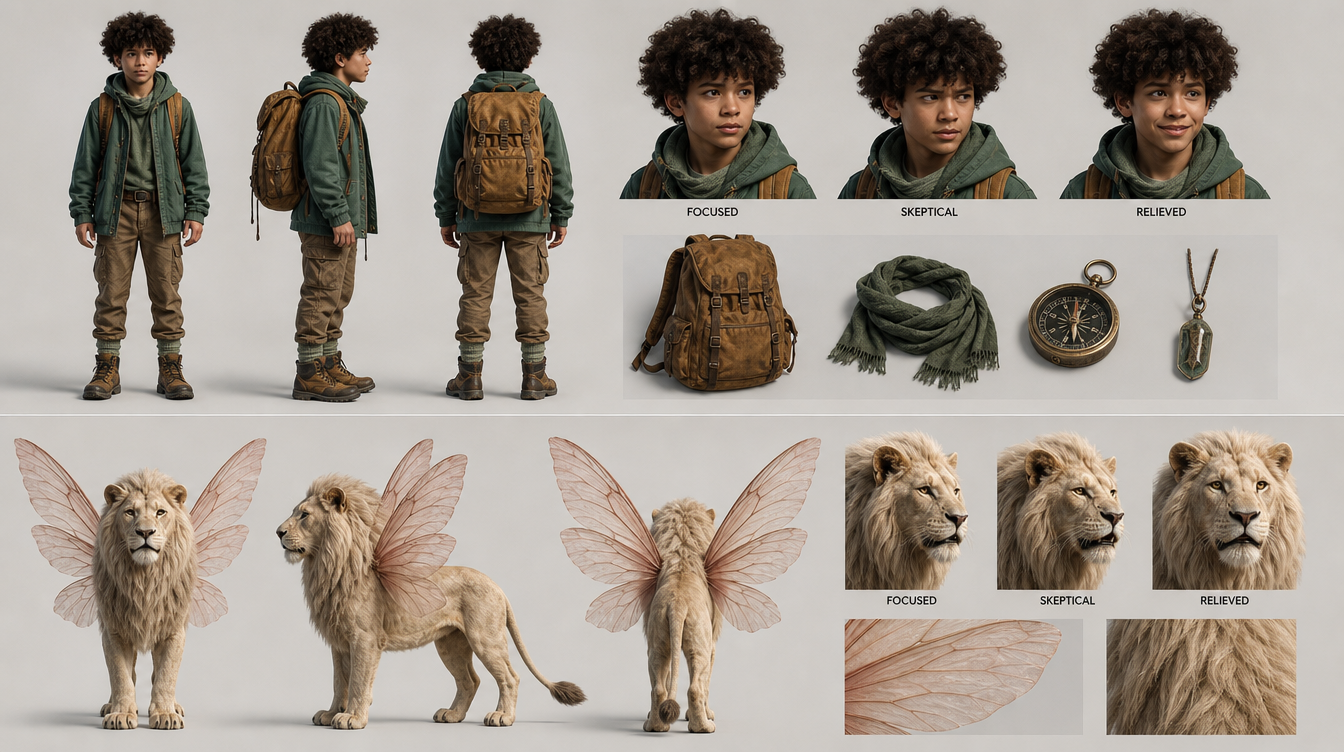
Character Sheet

Nano Banana 2
Step 2: Turn your starting image into a depth map with this prompt. For the sake of this comparison, we also converted the storyboard depth map into a regular storyboard.
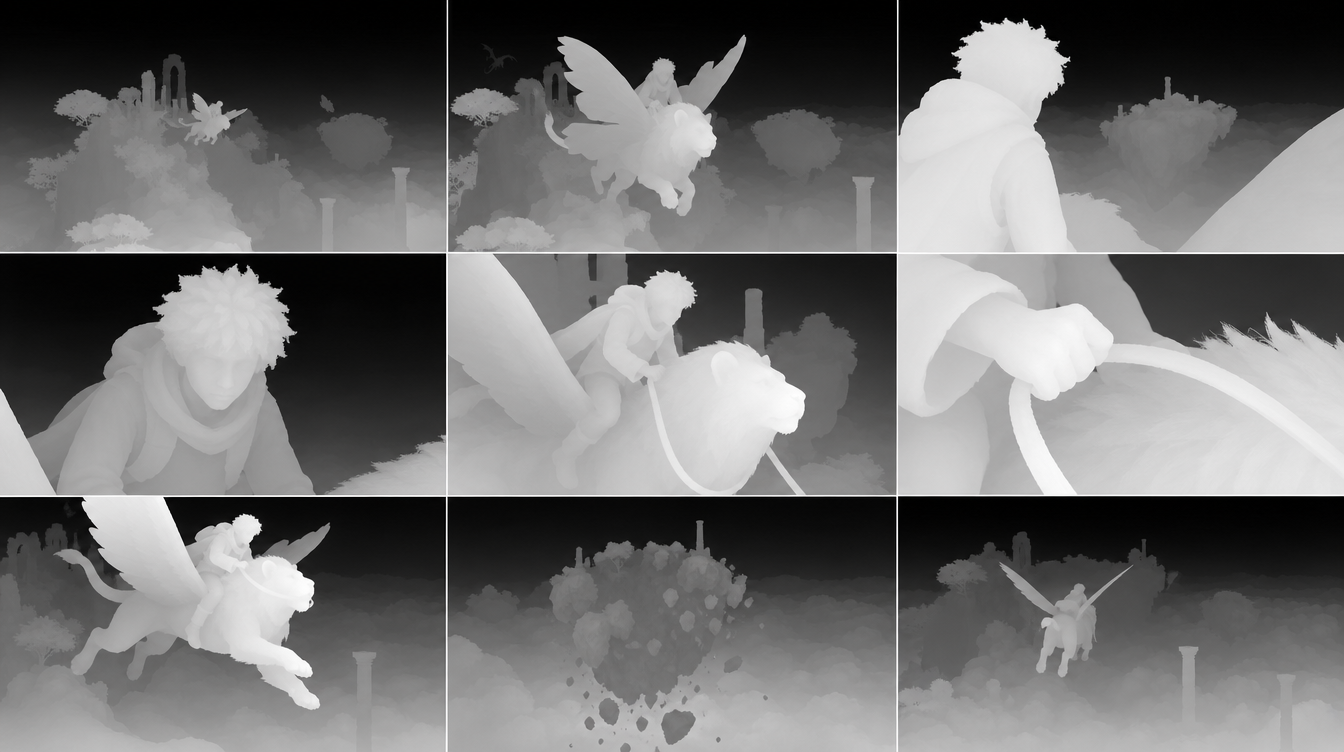
Storyboard Depth Map

Storyboard
Step 3: Generate the clips with Seedance 2.0 with the your references + storyboard panel.
Seedance 2.0 Output: Depth Map Storyboard Workflow
Seedance 2.0 Output: Traditional Storyboard Workflow
The results were interesting if you have flexibility for what the output needs to be.
The traditional storyboard followed the uploaded frames more literally.
The depth map version gave Seedance more freedom to interpret the environment, producing stronger scene continuity and more believable camera movement—even if it wasn't a perfect shot-for-shot recreation.
For filmmakers willing to trade a little precision for better overall flow, this workflow shows real promise.
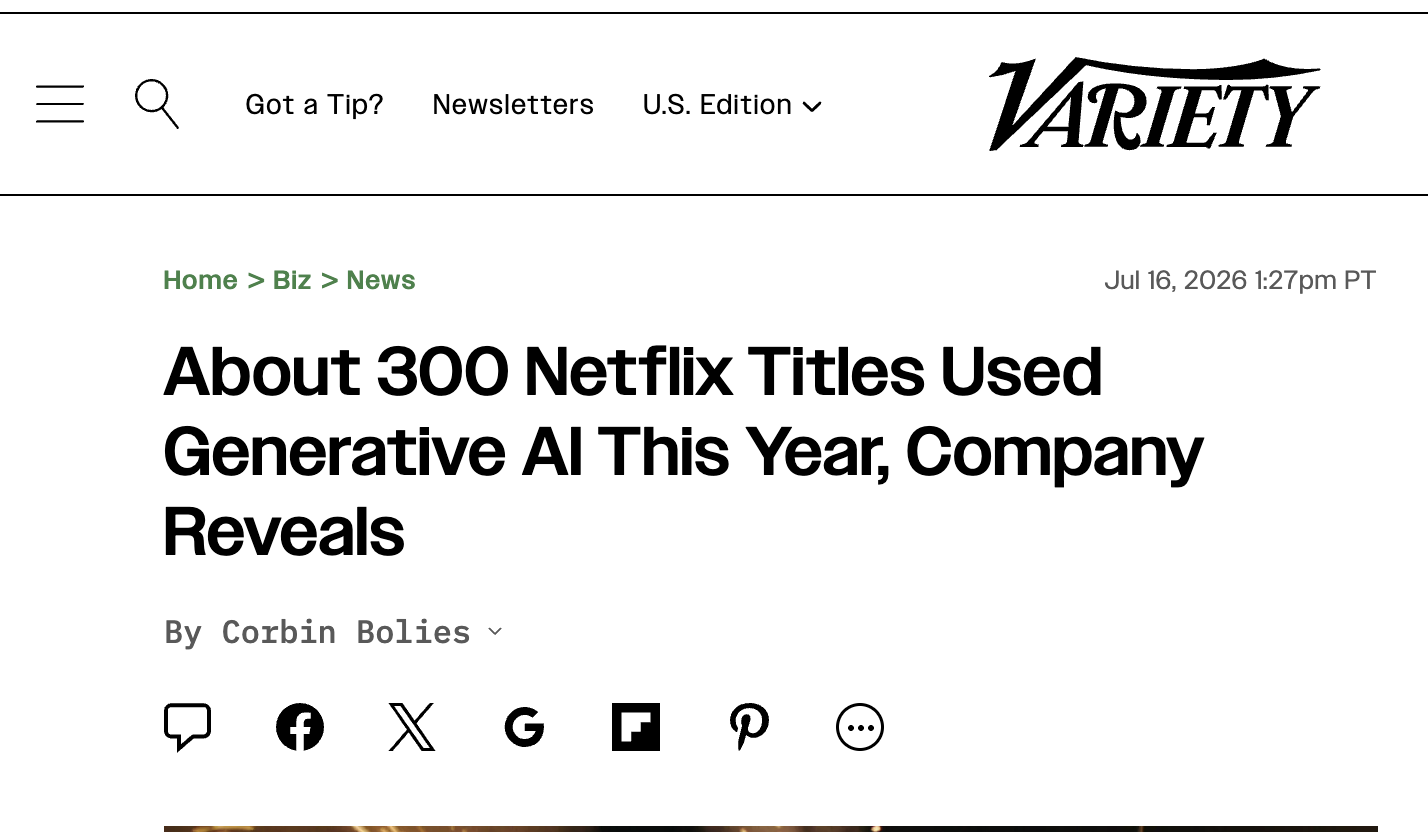
6. Netflix Says AI Has Been Used in More Than 300 Productions
Netflix revealed that artificial intelligence has now been used across 300+ productions.
According to the company, AI has contributed throughout the production pipeline, including:
Pre-production
Visual effects
Post-production
This continues a broader trend of major studios becoming increasingly transparent about their AI adoption.
Rather than replacing filmmaking, AI is becoming another tool inside existing production workflows.
7. Adobe's AI Report Shows Creative Adoption Is Accelerating
Adobe also released its new Creator Toolkit Report, surveying over 16,000 creative professionals.
Some notable findings include:
87% say AI has accelerated business growth or audience growth
75% say AI is now essential to their work
57% still edit AI outputs before publishing
The report suggests AI is quickly becoming part of everyday creative workflows rather than a niche experiment.
8. Over Half of Deezer Uploads Are AI Generated
Music platform Deezer announced that more than half of all newly uploaded music is now AI-generated.
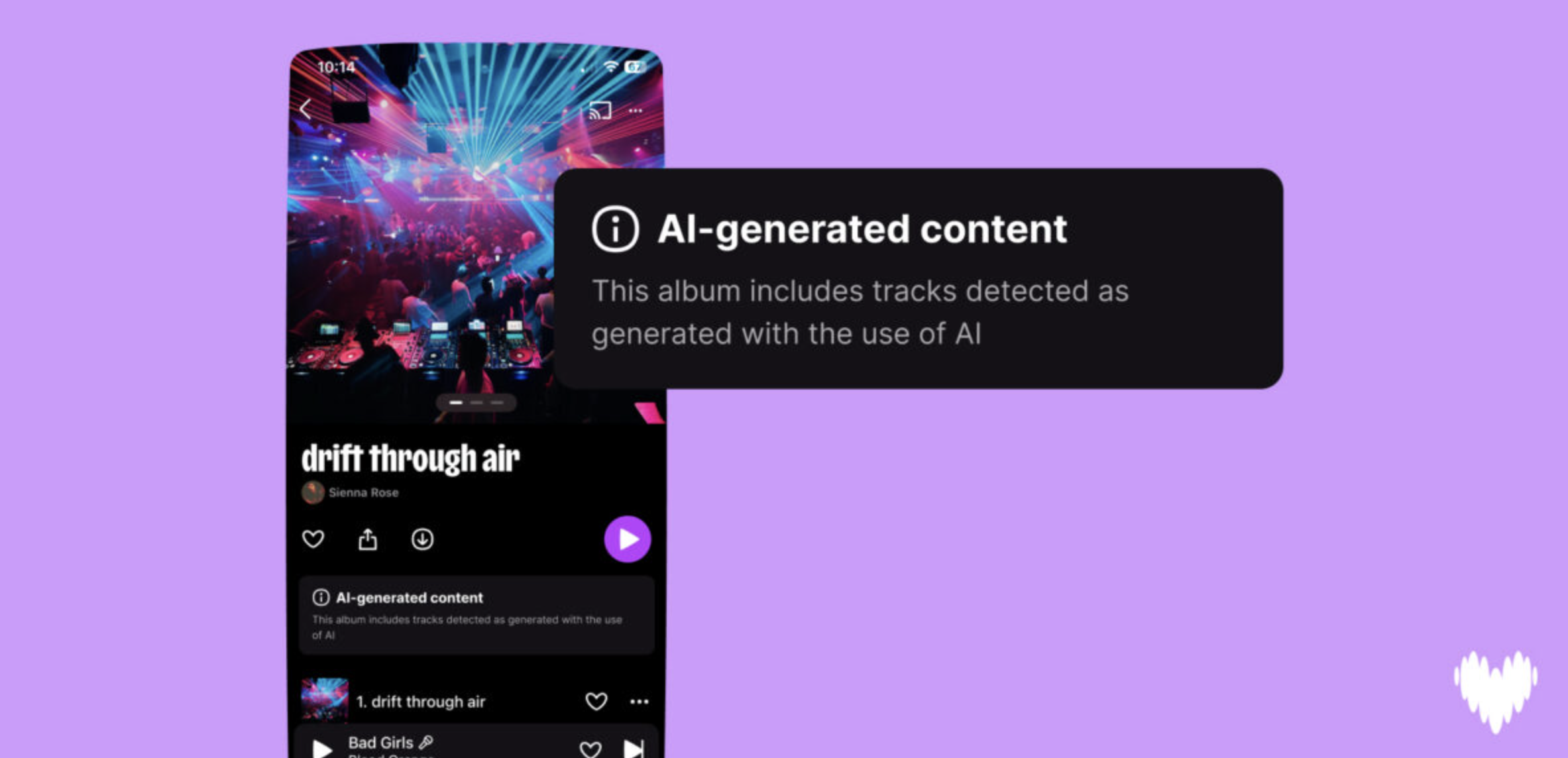
The company also found that 97% of listeners couldn't reliably identify which songs were AI-generated.
For creators, it's another reminder that standing out increasingly depends on storytelling, originality, and audience connection—not simply producing content faster.
9. LinkedIn May Be the Most AI-Generated Social Platform
A recent report also suggested LinkedIn has become one of the most AI-saturated social platforms (ahem long em dashes and emoji bullet points).

It highlights an important shift: as AI-generated content becomes easier to create, authentic perspective becomes increasingly valuable.
10. Anthropic Launches Rare Disease Research Grants
Anthropic announced funding for researchers working on rare diseases.
The company is offering grants of up to $50,000 to support research affecting diseases that often receive little traditional funding despite impacting millions of people worldwide.
It's an encouraging example of AI being applied beyond creative workflows.
We also prompted for the reverse, landscape to portrait (16:9 to 9:16) aspect ratio change. Here’s what we got:
Learn Free AI Filmmaking workflows
This week's stories all point toward the same larger trend.
Rather than replacing traditional filmmaking, AI tools are becoming deeply integrated into every stage of production—from camera capture and virtual production to post-production, editing, visual effects, and creative planning.
Whether it's 4DV's camera arrays, Netflix's growing AI adoption, or new real-time VFX workflows, filmmakers are gaining more flexibility than ever before.
If you want to stay ahead of these changes, be sure to watch the full AI Film News episode and join our free AI filmmaking community.
Fill out the form above and get instant access. You also get free access to our global community full of AI creative from all walks of like.
We would love to see you there!
