
Human vs AI: Who’s Actually More Creative? | Tutorial
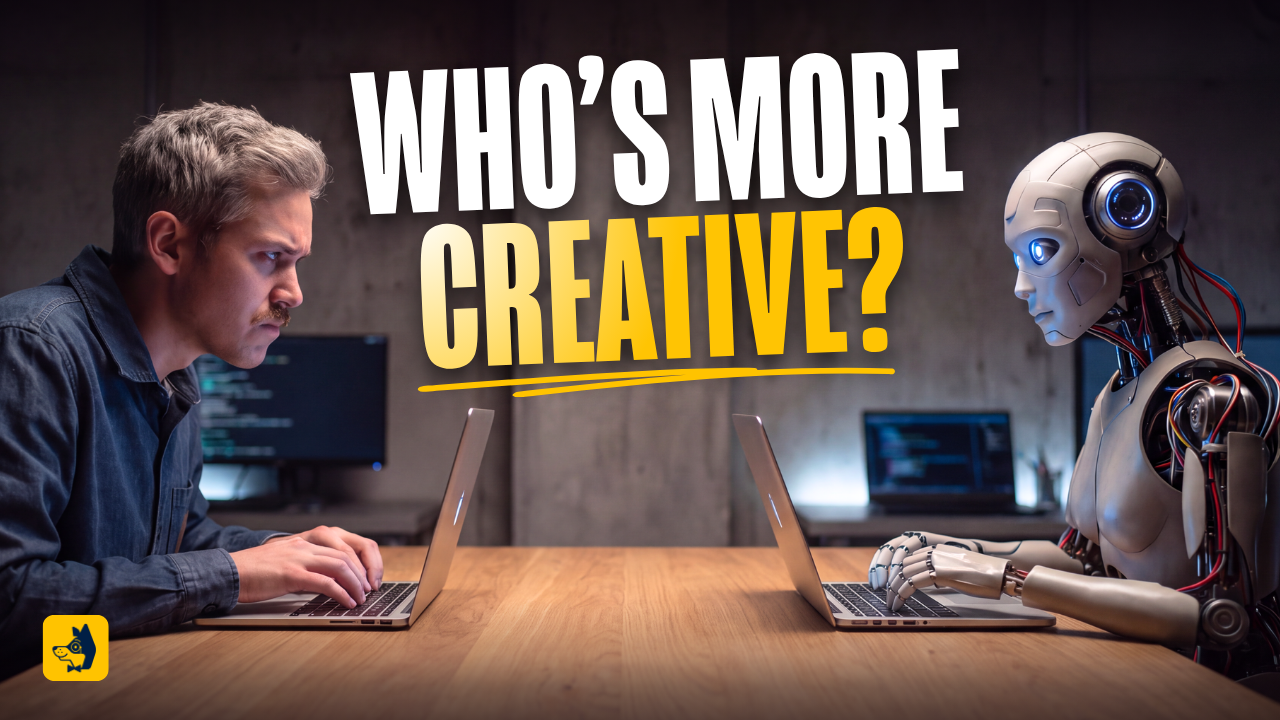
In this article and tutorial, we’ll we'll test two different approaches to AI agents and see how they stack up against human creative AI work.
AI agents are showing up inside just about every creative platform right now. And while they’re getting increasingly good at automating tasks, there’s a much bigger question we wanted to answer:
Can they actually be creative?
To find out, we gave the same advertising assignment to two different types of AI agents and compared the results against an ad created by a human AI artist.
We tested:
A human-created AI advertisement
Luma’s application-based AI agent
Then, we ran the experiment again with much more creative direction to see if giving the agents less room for interpretation would improve the results.
Here’s what happened.
Human vs AI: Who’s Actually More Creative? | Tutorial
Check out the full tutorial below to see every advertisement and comparison in action.
Human vs AI: Who’s Actually More Creative? | Tutorial
Below is our full breakdown after putting AI agents head-to-head with a human creative.
Can AI Agents Come Up With the Creative Idea?
For our first test, we started with a general creative brief for a 30-second Converse ad. It included the target audience and what we wanted the ad to accomplish, but intentionally left plenty of room for creative interpretation.
We compared the human-created ad from Curious Refuge member Luis Sanchez, who also used AI to create it, against versions created by Luma and ChatGPT Astra.
Converse Ad by Curious Refuge member Luis Sanchez
The difference was pretty clear.
The human-led ad had the strongest concept. It followed a 65-year-old tightrope walker who had never fallen until he wore the wrong pair of shoes, giving the entire ad an idea that tied the shots together.
Luma Agent
GPT Astra
Luma was able to automatically create keyframes, generate the shots, and edit everything into a finished ad. But the result felt more like a strange montage than a cohesive concept. There were also major issues with the product, logo, and individual generations.
Astra did noticeably better. The music fit the overall vibe and the edit felt more intentional, but the concept itself was still pretty basic and there were inconsistencies with the product.
So while both agents successfully made an ad, neither really came up with a strong creative idea. That's where the human version pulled significantly ahead.
For context, Luma took about 15 minutes and cost $14, while Astra took about 17 minutes and cost $20.
Does More Creative Direction Help?
For our second test, we wanted to remove some of the creative decision-making from the agents.
Instead of giving them an open-ended brief, we used Luis's original ad as our baseline and broke it down into specific blocks with the voiceover, shots, timing, and overall direction we wanted. Here’s the production brief.
In other words, the human had already figured out the concept. The agents just needed to execute it.
Once again, we compared all three versions.
Luma Agent
GPT Astra
More creative direction definitely helped, but it didn't solve everything.
Luma's version felt more intentional, but still had major issues with the voiceover (did you notice it’s in Mandarin?! even after prompting it to be in english), tightrope geometry, and product consistency.
Astra again produced the stronger AI version, with a couple of potentially usable shots. But the overall ad still struggled with blocking, pacing, and consistency.
Even with the concept, shots, voiceover, and timing mapped out, neither agent could execute the idea at a professional level.
Luma took about 14 minutes and cost $11.27, while Astra took about 17 minutes and cost approximately $23.
Application-Based AI Agents vs. ChatGPT Astra
Across both tests, ChatGPT Astra was clearly more promising than the application-based agent we tested inside Luma.
Luma could automate an impressive amount of the process, including creating keyframes, generating shots, and editing everything together. But the finished results had major creative and technical problems, even when we gave it more specific direction.
Astra wasn't perfect either. The ads still had issues with product consistency, blocking, pacing, and overall polish. But across both tests, the results felt more intentional and were closer to something we could actually use.
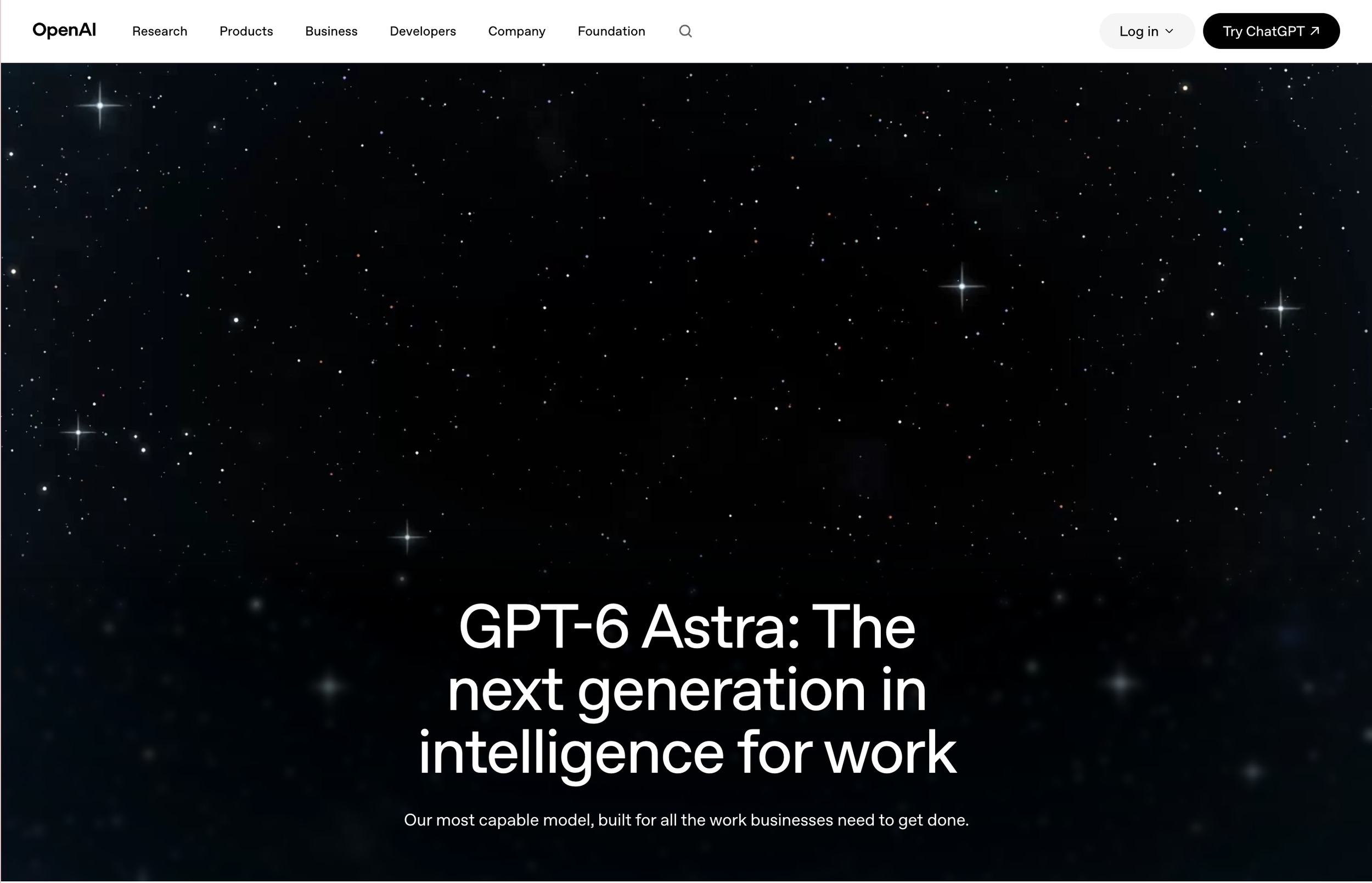
That's where we think frontier agents like Astra get really interesting.
Unlike agents that live inside a single creative application, frontier agents can work across tools, access information, use connectors, interact with applications, and perform multiple steps of a workflow.
Right now, we think their strongest use cases are still tasks that require relatively little creativity, like organizing files and data, handling repetitive production work, or putting together a quick-and-dirty rough cut.
Final Thoughts
Even though Astra performed better than Luma, neither AI approach matched the human-created advertisement.
With an open-ended brief, the agents struggled to come up with a compelling concept.
When we gave them much more specific creative direction, the results improved, but they still couldn't execute that direction with the same consistency, pacing, and polish.
For now, the most interesting workflow is somewhere in the middle: humans driving the concept, taste, and creative direction, with frontier agents increasingly helping execute the repetitive and technical work around it.
AI agents are getting dramatically more capable, and that balance will almost certainly keep changing. But based on our tests, human taste, storytelling, and creative direction still matter.
Free Intro Course
Check out our free AI Storytelling course. You can fill out the form below and gain access immediately at no cost to you.
In the course, we show some of the basics for creating films using the latest AI tools, as well as, share some insights into the future of the creative industry.
Along with the course, you also get access to the exclusive chat channel where you can network with industry professionals.
We would love to see you in the course, but of course no pressure!
