
MiniMax H3 | An Honest AI Video Review
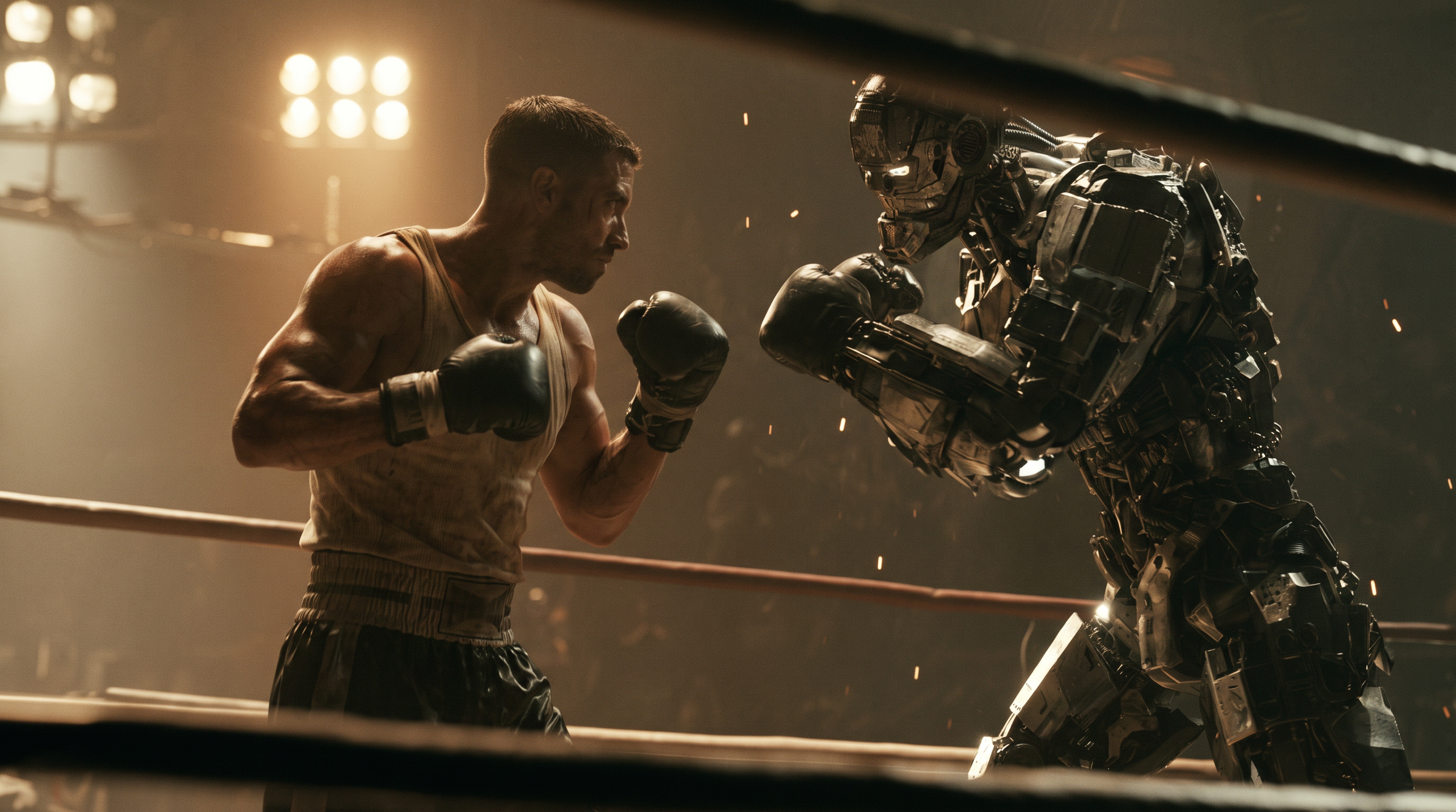
In this article, we’ll share our honest review of MiniMax H3.
Hailuo AI just released MiniMax H3, its newest AI video generation model. It introduces several major upgrades, including 2K video generation, support for image, video, and audio references, and an open-weight version that creators can run locally.
In this article, we'll break down what MiniMax H3 does well, where it falls short, and whether it's worth using over competitors like Seedance 2.5.
MiniMax H3 | Full Review
Check out this tutorial and see some of the tests we ran.
MiniMax H3 | Honest Review
Below is a breakdown showing our MiniMax H3 review.
What Is MiniMax H3?
MiniMax H3 is Hailuo AI's newest AI video generation model, and it's one of the biggest updates we've seen from the platform.
The model can generate video clips up to 15 seconds long at 2K resolution through the hosted version, while also offering an open-weight version that creators can download and run locally at 768p.
Unlike traditional text-to-video models, MiniMax H3 is an Omni model, meaning it can work with multiple types of reference assets in a single generation. You can upload:
Up to 9 reference images
Up to 3 video clips
Up to 3 audio clips
It can also generate dialogue, sound effects, and music in up to 11 languages while supporting multiple aspect ratios, including 16:9, 21:9, and 9:16 for social content and microdramas.
MiniMax H3 Pricing
MiniMax H3 has one of the more unusual pricing models we've seen for AI video generation.
The base price for the hosted 2K version is about $0.13 per second, meaning a full 15-second generation costs around $1.95.
The catch is that pricing depends on how many reference assets you use. You can upload up to five images at the base price, but adding more images or reference videos increases the cost. In some cases, a 15-second generation can cost just over $4.
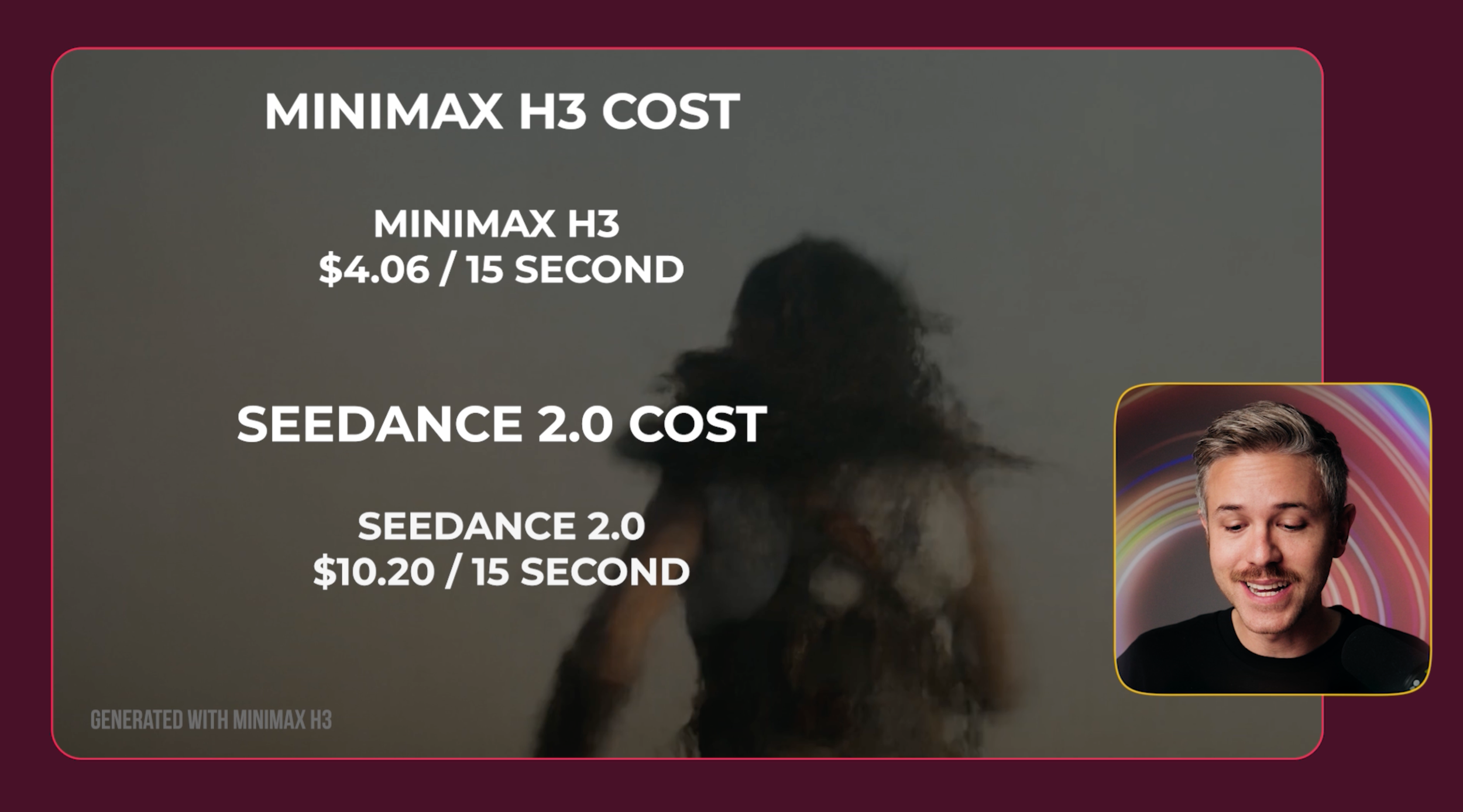
Even at its highest price, MiniMax H3 remains significantly cheaper than Seedance, costing roughly 60% less for a comparable generation.
The Good: A Powerful Omni Model
Because MiniMax H3 is also an Omni model, you aren't limited to just a text prompt. You can combine images, video clips, and audio together to guide the generation, giving you much more creative control over the final result.
For filmmakers, that opens the door to more advanced workflows like:
Building scenes from multiple character references
Using previous shots as continuity references
Incorporating dialogue and sound directly into generations
Creating videos across cinematic, widescreen, and vertical formats

Character Reference 1

Character Reference 2

Location Reference
MiniMax H3
The addition of native 2K output is also a welcome improvement. Many competing models still cap generations at 720p, requiring an additional upscaling step before footage is ready for production.
On paper, MiniMax H3 checks a lot of boxes.
The bigger question is how well those features actually perform.
The Biggest Weaknesses Right Now
After testing MiniMax H3 across action scenes, dialogue, emotional performances, and VFX shots, one trend became clear:
Seedance consistently produced stronger results.
MiniMax H3
Seedance 2.5
1. Physics Still Trail Seedance: Across nearly every action test, Seedance produced more believable motion and stronger physical interactions. MiniMax H3 often struggled with large-scale action, introducing artifacts and movements that broke the illusion.
MiniMax H3
Seedance 2.5
2. Multi-Shot Storytelling Needs Work: MiniMax H3 can generate complete scenes with multiple shots, but they often lack the subtle details that make them feel cinematic. Compared to Seedance, characters were less expressive, edits felt less natural, and continuity broke down more frequently.
MiniMax H3
Seedance 2.5
3. Visual Artifacts Are Still Common: Texture instability, facial distortions, inconsistent compositing, and visual noise appeared throughout our testing. While acceptable for some social content, these issues make the model harder to recommend for high-end filmmaking.
MiniMax H3
Seedance 2.5
The Open-Weight Version is the Real Standout
The most exciting part of MiniMax H3 is actually the open-weight release.
For the first time, creators can download the model, run it locally, and generate AI video without relying on cloud-based services.
While the downloadable version is limited to 768p, it performed surprisingly well in testing—especially when compared to other open-source video models like LTX 2.3.
MiniMax H3 Open-weights
LTX 2.3
There is one important caveat, though.
The current licensing agreement restricts creators in the United States, the EU, the UK, and South Korea from distributing videos generated with the open-weight model, making it difficult to use for commercial projects or even share work publicly.
Even with those limitations, the MiniMax H3 open-weight model could become one of the strongest free options available for AI video creators if its licensing terms are updated in the future.
Final Verdict: MiniMax H3 Review
MiniMax H3 is a strong addition to the current generation of AI video models.
Its multi-reference workflows, native 2K output, and downloadable open-weight version make it one of the more interesting releases we've seen this year.
In our testing, MiniMax H3 generally fell short of leading cinematic models like Seedance, particularly when it came to physics, motion, and multi-shot storytelling.
However, it consistently outperformed LTX 2.3, making it one of the strongest open-weight AI video models currently available right now.
Seedance 2.5
MiniMax H3
LTX 2.3
The biggest limitation isn't the model itself—it's the licensing.
The current open-weight license restricts creators in the U.S., UK, EU, and South Korea from distributing the videos they generate, making it difficult to use for commercial work.
If MiniMax updates its licensing terms, H3 could quickly become one of the most compelling open-weight AI video models available, especially for creators who want to run powerful AI video workflows locally.
Free Course | Intro to AI Storytelling
Fill out the form below and gain access to our free intro to AI storytelling course. We would love to see you in there.
Plus, you'll join a community of AI creatives from around the world who are learning, experimenting, and building together.
